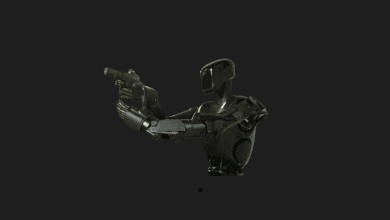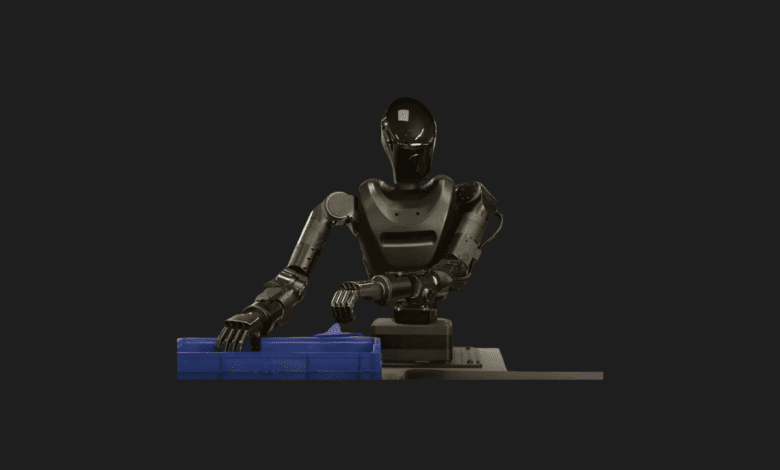

Foundation, a US-based robotics company, has attracted attention by announcing plans to produce 50,000 robot soldiers within the next three years. The weaponization of robots is raising concerns.
Parallel to the explosion in the field of artificial intelligence, significant breakthroughs in robotics have paved the way for humanoid robots, once exclusive to science fiction, to become reality faster than expected. While humanoid robots for use in homes or factories appear to be only a few years away, this breakthrough also has a military wing. Indeed, humanoid robot projects to be used by armies have already started to emerge. Foundation appears to be one of the most ambitious companies in this regard.
Foundation announced its goal to produce 50,000 combat-ready humanoid robots by the end of 2027. This target, revealed by the company’s CEO Sankaet Pathak in an interview with Forbes on December 16, goes far beyond the previously stated plan of 10,000 robots by 2026. According to Pathak, the company plans to produce 40 robots in 2025, increase this number to 10,000 in 2026, and reach the 40,000 to 50,000 range in 2027. While Pathak admits this schedule is highly ambitious, he emphasizes that the probability of reaching the goal is not zero.
Robot Soldier Phantom MK-1 Could Take the Field in the Near Future

At the center of Foundation’s plans is the humanoid robot named Phantom MK-1. Approximately 1.75 meters tall and weighing 80 kilograms, this robot is designed for reconnaissance, bomb disposal, logistical support, and direct combat scenarios. The company states that the Phantom MK-1 aims to reduce the risk human soldiers are exposed to during military operations. Foundation has already taken significant steps in this regard. It is known that Foundation has already signed logistics and maintenance-focused contracts with the US Air Force, Navy, and Army.
Foundation’s current approach involves humans in critical decisions. While robots handle movement, navigation, and operational tasks in the field, lethal decisions are made remotely by human operators.
Instead of selling its robots directly, Foundation plans to offer them through a leasing model of approximately $100,000 annually. According to Pathak, the company does not need hundreds of customers to be successful; a few large-scale and long-term contracts can generate hundreds of millions of dollars in annual recurring revenue. If the company reaches its targeted production volume, leasing 50,000 robots theoretically means an annual revenue of approximately $5 billion.


Promises Not to Weaponize Robots Become History
Although it is open to debate whether Foundation can produce 50,000 robots that work smoothly in the field in as short a time as three years, the transformation indicated by this latest announcement is quite clear. Concrete steps are now being taken to weaponize robots.
In contrast, leading robotics companies such as Boston Dynamics, Agility Robotics, and Unitree signed a public pledge in 2022 stating they would not weaponize robots, warning that weaponized robots would pose serious ethical risks. However, at the point we have reached today, this pledge seems to have gone unfulfilled. Although these companies are not working on robot soldiers for now, unlike Foundation, it seems almost inevitable that they will take a similar path when looking at the general trend in the sector. As you may recall, Google and OpenAI had previously made similar pledges regarding their AIs but moved away from these promises over time. With changes made in recent months, both companies have paved the way for their AIs to be used in such technologies.
Now, Foundation’s announcement shows that some companies further in the background have started to proceed openly on this path. The company’s announcement brings the question “How far should robots be allowed to go?” back to the agenda.
The issue of weaponized humanoid robots has been on the agenda of not only the technology world but also international politics and human rights organizations for a long time. UN Secretary-General António Guterres described lethal autonomous weapons as “morally unacceptable” in May 2025 and called for clear regulations by 2026. On the other hand, global coalitions such as Stop Killer Robots are trying to prevent this frightening shift. However, as long as certain restrictive agreements are not signed on a global scale, these efforts seem likely to remain unreciprocated.
You Might Also Like;